You reach up to grab something off a high shelf and click. A sharp twinge deep in the shoulder. Maybe it’s been building for months and your shoulder has just had enough. Oftentimes most people generalise the injury calling it ‘bursitis’ or a rotator cuff tear. SLAP injuries are very commonly missed and we wonder why we are not getting any better?
If that sounds familiar, you could be dealing with a SLAP tear. The good news? For many people, the road back doesn’t start in an operating theatre. It starts with physiotherapy.
So what exactly is a SLAP tear?
Think of your shoulder socket as a shallow golf tee holding a ball. Around the rim of that tee sits the labrum, a ring of cartilage that deepens the socket and keeps the ball where it belongs.
A SLAP tear (Superior Labrum, Anterior to Posterior) is a tear right at the top of that ring. It’s a busy spot: it’s where your biceps tendon attaches to the shoulder. So when the labrum tears here, the biceps often gets pulled into the story too.
How it happens and how it feels
SLAP tears tend to arrive in one of two ways:
- The sudden hit: a fall onto an outstretched arm, or a direct blow to the shoulder.
- The slow burn: thousands of repetitive overhead movements, think baseball pitchers, volleyball players, swimmers and tradies working above their heads.
Not sure if it’s you? Common signs include:
- A deep ache in the shoulder, especially when reaching overhead
- Popping, clicking or catching inside the joint
- Weakness, or the arm feeling like it “gives out”
- Trouble throwing, lifting or serving the way you used to
What physio actually looks like
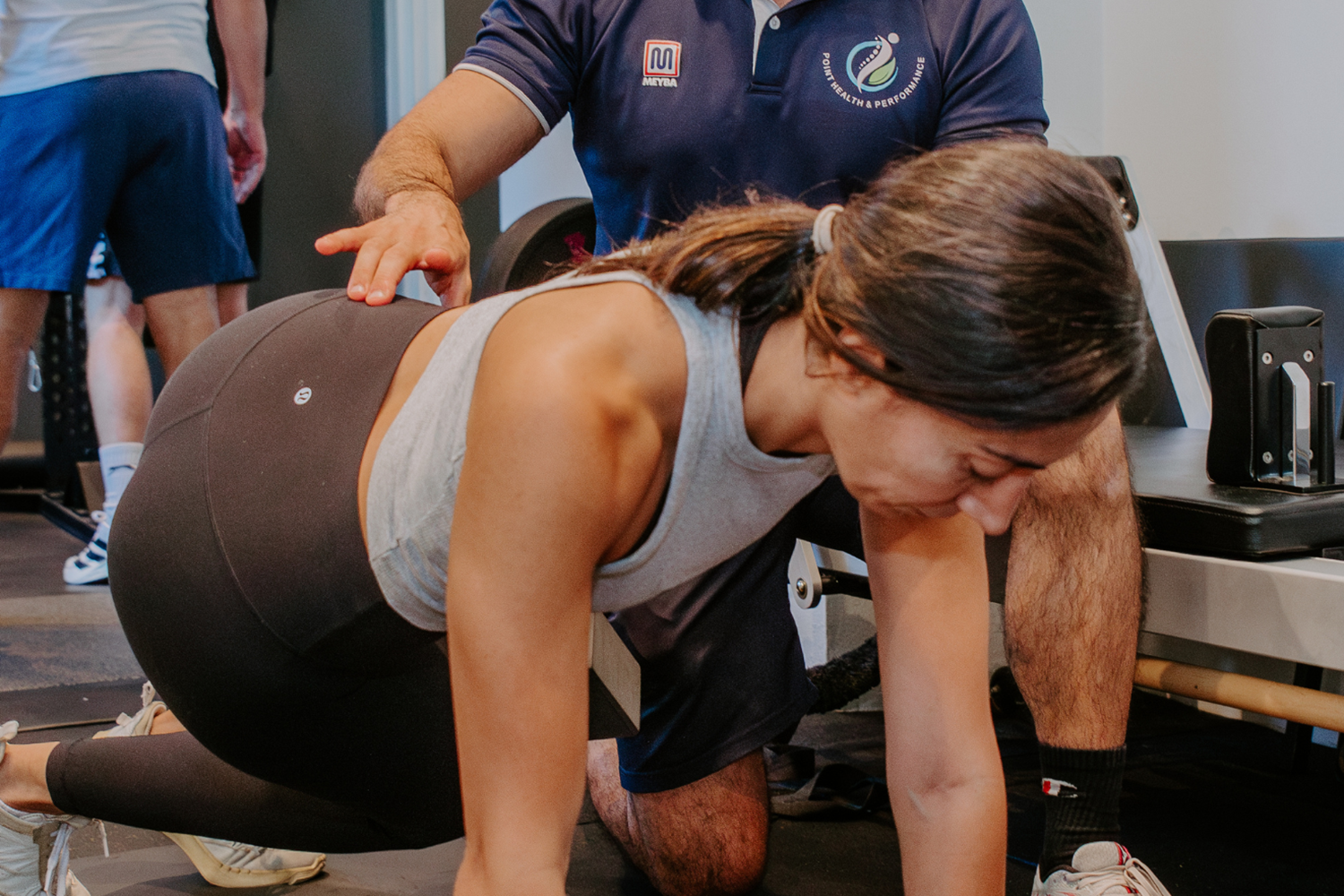
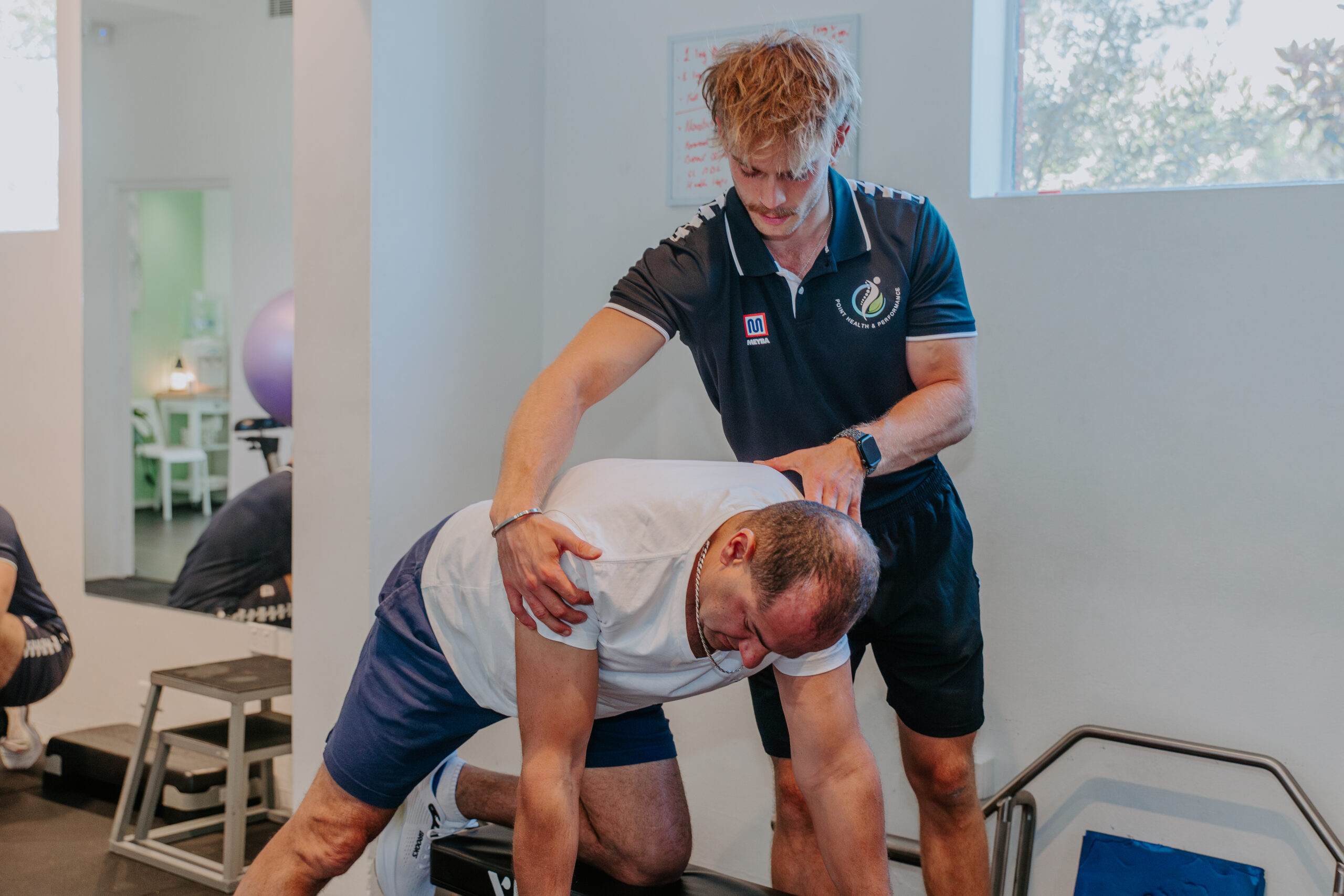
Physiotherapy for a SLAP tear isn’t about “resting it and hoping.” It’s an active, step-by-step plan built around your shoulder, your sport and your goals. Your physio will work on three fronts:
- Calm the pain. Hands-on techniques like joint mobilisation, soft tissue massage and targeted stretching settle the shoulder and get it moving again.
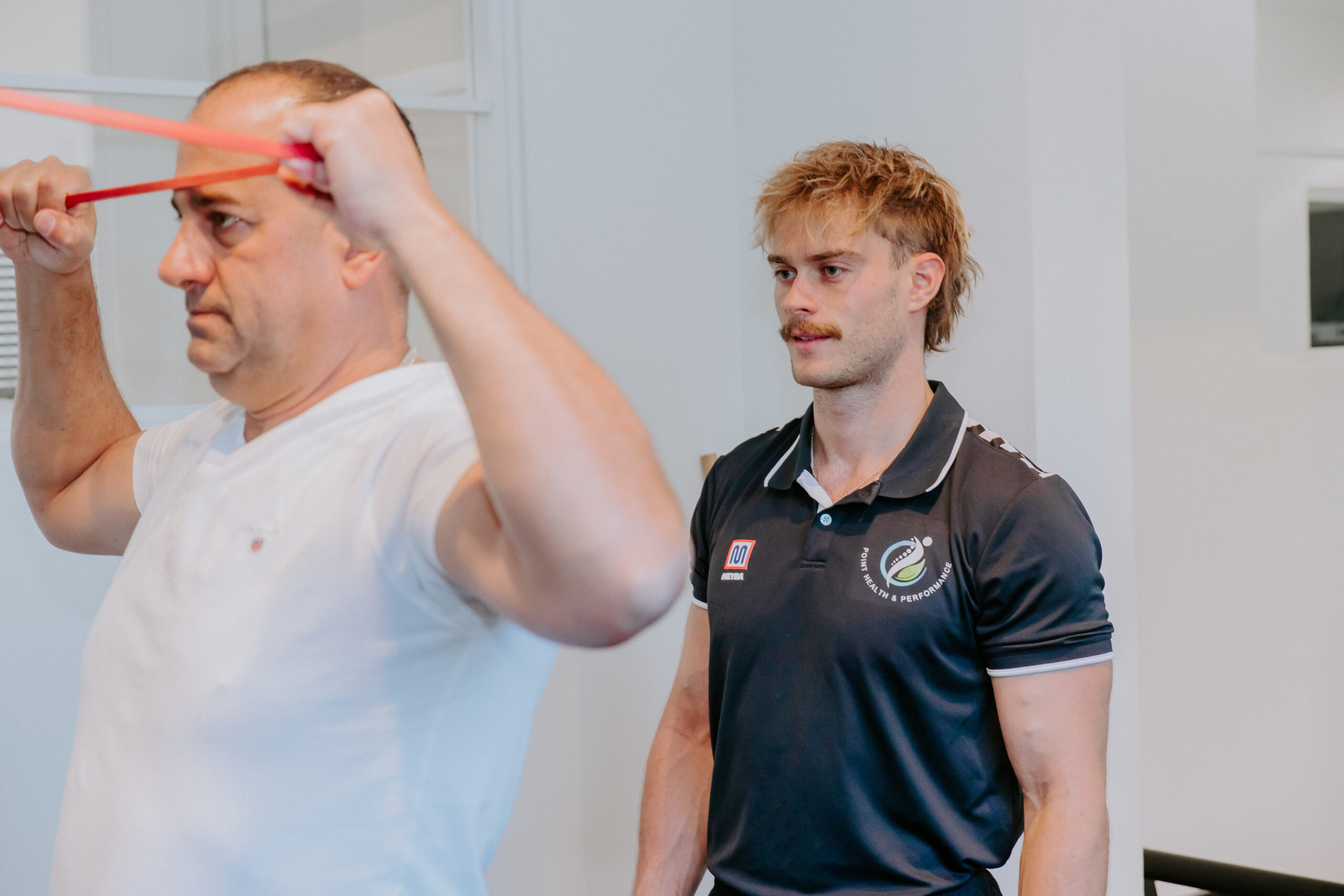
- Rebuild the stabilisers. Progressive strengthening of the rotator cuff and the muscles around your shoulder blade (the unsung heroes that keep the ball centred in its socket.)
- Restore full movement. Mobility work that gradually returns your reach, rotation and overhead power.
How quickly you progress depends on the severity of the tear, how consistently you do your exercises, and the experience of your physio. Stick with it, and most people see steady gains in pain, range of motion, strength and everyday function.
Physio or surgery?
Some SLAP tears do need surgery. The usual procedure is a shoulder arthroscopy: through a few small incisions, the surgeon slides in a tiny camera, looks inside the joint and reattaches the torn labrum — and sometimes the biceps tendon too. Even then, recovery afterwards relies heavily on physio.
But here’s what many people don’t hear: research suggests physiotherapy can be just as effective as surgery for many SLAP tears, particularly less severe ones. Some patients who choose physio report similar pain relief, shoulder function and satisfaction to those who go under the knife.
| Physiotherapy | Surgery | |
|---|---|---|
| Invasive? | No | Yes, arthroscopic |
| Risk | Low | Surgical and anaesthetic risks |
| Cost | Lower | Higher |
| Rehab needed? | It is the rehab | Yes, physio afterwards |
| Best suited to | Many tears, especially less severe | Severe tears, or when physio hasn’t helped |
That’s why physio is widely recommended as the first-line treatment and surgery as the backup plan, not the opening move.
Get your shoulder back in the game
A SLAP tear doesn’t have to sideline you from the sport, work or hobbies you love. With us, you’ll get a personalised plan matched to your goals, hands-on care, and practical advice to protect your shoulder for the long haul.
Ready to reach overhead without wincing? Book your appointment today.